Start here
Aim for roughly five minutes and 45–70 photographs. Organize them around a theme, keep each chapter visually distinct, and use one or two songs. End on the couple as they are now, then test the exact exported file on the venue’s equipment.
Ten structures that give the pictures a story
Two lives, one timeline
Alternate the couple at the same ages. The visual parallels create momentum toward their meeting.
How their friends saw it
Group images by the communities that know them—family, school, work, travel, chosen family—then let each chapter contribute one sentence.
The places that made them
Build one chapter for each important location. Maps, signs, and establishing photographs make the transitions easy to follow.
A field guide to the couple
Use recurring habits as chapters: what they cook, how they travel, where they disappear on Sundays, and the face each makes in every group photo.
Five objects, five stories
Photograph or scan objects with meaning, then place archival images around each one. It creates a stronger visual motif than decorative templates.
The accidental fashion archive
Use clothes, hair, and questionable eras for warmth, then turn the joke toward how confidently they have always been themselves.
A year in twelve moments
For a couple with a rich recent story, choose one image per month and let the seasons give you pacing for free.
The people behind the camera
Include short captions naming who took key photographs and why they kept them. It quietly brings the room into the story.
Predictions and proof
Pair old quotes or yearbook predictions with images of what happened. Finish with a question about the years for which there are no photographs yet.
From slideshow to movie
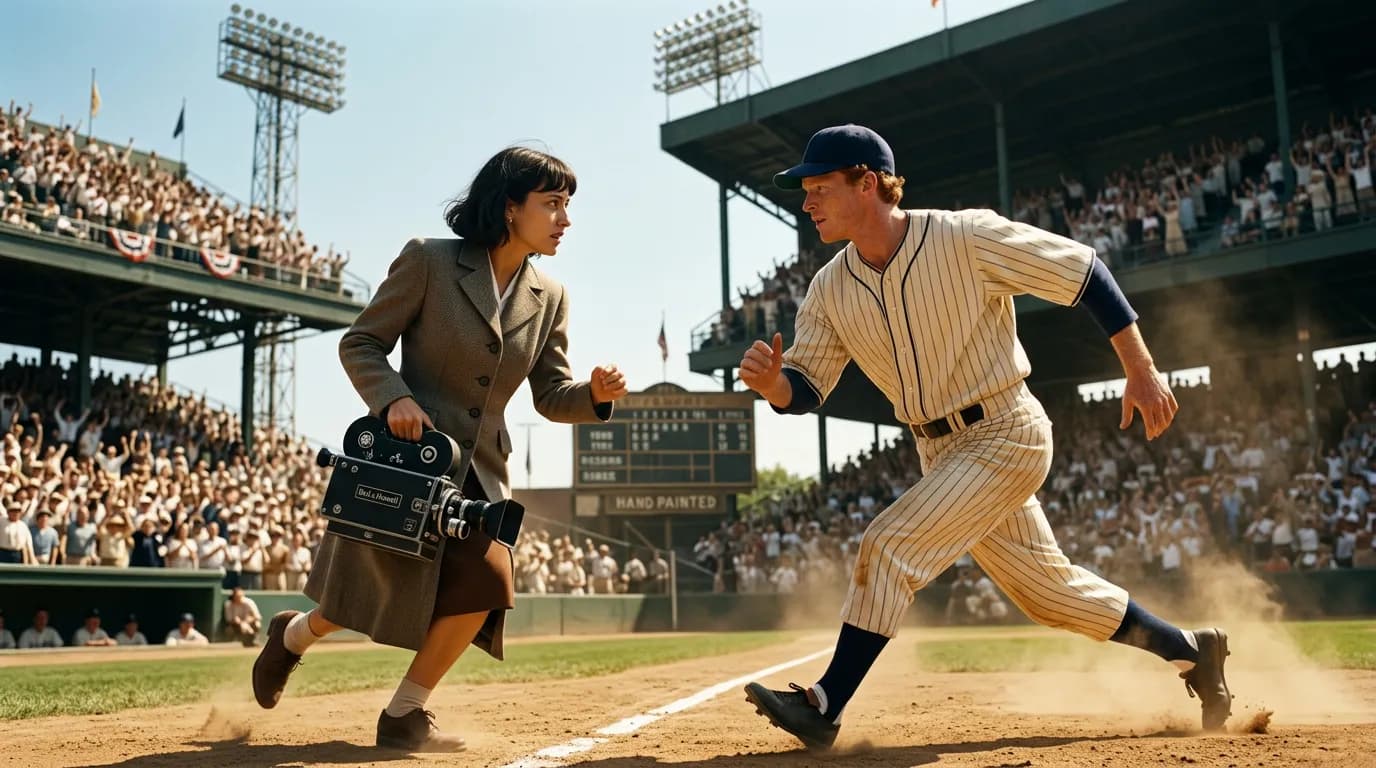
Use portraits as the starting point for a new fictional film and place the couple inside several cinematic worlds.
A five-minute edit that keeps moving
0:00–0:20 — Cold open
Begin on one surprising image and one line. Do not open with a title card that explains what everyone already knows.
0:20–1:30 — Two beginnings
Establish each person with a handful of specific images. Alternate between them until the timelines meet.
1:30–3:30 — The collision
Move into shared friends, first trips, ordinary rituals, and the moments in which the relationship becomes visible.
3:30–4:40 — The people around them
Widen the story to family and friends in the room. Include faces from several tables so the audience can find itself in the edit.
4:40–5:00 — The final image
End on a recent portrait or an empty frame reserved for the wedding photograph. Hold it long enough for applause.
Technical choices the audience can feel
Edit for the back of the room
Avoid tiny collages and long captions. One or two images at a time will read on a mediocre projector from twenty meters away.
Let music shape chapters
Choose tracks for pace and feeling. Cut at the end of a musical phrase; cutting on every beat quickly becomes tiring.
Use motion sparingly
A slow crop can help a portrait fill 16:9. Constant spins, flips, and template transitions make the software more visible than the people.
Export and carry backups
Use a common MP4 format, bring the file on two devices, disable notifications, and verify that the venue can play it offline with sound. Ask the venue and music provider what playback permission is required; do not assume a personal streaming subscription covers event playback.
Common questions
How many pictures should be in a wedding slideshow?
About 45–70 images works well for a five-minute slideshow, depending on pacing and whether captions appear. Fewer strong photographs are better than rushing through a complete archive.
How long should a wedding slideshow be?
Five minutes is a useful target for a reception feature. Stretch toward eight only when the show includes video, narration, or clearly distinct chapters that justify the time.
What is the best format for a wedding slideshow?
Export a 16:9 MP4 at 1080p unless the venue requests something different. A video file is more predictable than relying on presentation software, fonts, or internet access at the venue.
What can we do instead of a wedding slideshow?
A short documentary, recorded message film, live photo story, audio guest book, or fictional cinematic movie can all carry personal material without using a traditional photo chronology.